4 Reasons to Remove a Tree Before It Becomes Dangerous
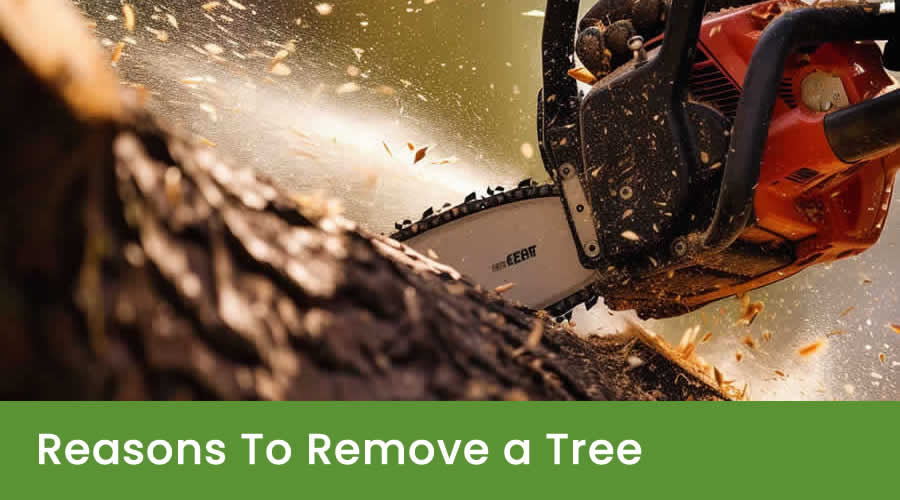
Trees add shade, beauty, and value to a property. But there are times when removal is the safest option. As these hazardous tree indicators show, signs such as dead limbs, broken branches, fresh cracks, root disturbance, and a strong lean can all point to serious risk.
1. The Tree Is Diseased
Disease is one of the clearest reasons to remove a tree. According to the Queensland government, fungal diseases and insect pests can damage shoots, leaves, crowns, and stems. In severe cases, that damage can kill the tree.
Some problems stay minor for a while. Others spread fast and weaken the tree from the inside. You might notice fungal growth, peeling bark, soft timber, dead branches, or large areas of dieback. Those signs often suggest the tree has lost strength.
A diseased tree can become dangerous when the damage reaches the trunk, roots, or major limbs. At that point, the tree may no longer hold its structure. If it stands near a house, driveway, fence or entertaining area, removal may be the safer choice.
2. The Tree Is Dead or Dying
A dead tree is one of the most obvious reasons to remove a tree. Dead timber dries out and becomes brittle. That makes branches more likely to snap and fall without warning. Over time, the whole tree can become unstable.
Dead or decaying trees and major branches are key warning signs after storms and other damage events. If a tree no longer produces healthy new growth, drops large limbs, or shows clear decline, it is worth arranging an inspection early.
Many homeowners wait because the tree is still standing. But a standing tree can still pose a real risk. Once decay sets in, the structure often weakens further. Acting early can reduce the chance of injury, damage and emergency removal costs.
3. The Tree Has Structural Problems
A tree does not need to die before it becomes dangerous. Structural problems can create serious risk on their own. A split trunk, lifting roots, disturbed soil, weak branch unions or a sudden lean can all increase the chance of failure.
This also appears in local tree removal criteria used by the City of Joondalup. Trees may qualify for removal when they are dead, hazardous, damaged beyond recovery, or diseased past the point of treatment.
In practical terms, a tree with major structural defects may not stay safe for long. The trunk may split further. Roots may stop anchoring the tree properly. Heavy limbs may begin to fail. If the main structure no longer looks sound, removal may be safer than waiting for the problem to worsen.
4. The Tree Has Significant Damage
Storms, lightning, excavation and vehicle impact can all leave a tree unsafe. A tree may still look green after major damage. But looks can be misleading. Large broken limbs, torn bark, trunk cracks, crown loss and root plate movement can all point to deeper structural failure.
Falling branches, fresh cracking, recent lean and root disturbance often signal increased risk after an event. Damage like this can change how the tree carries weight. It can also make the tree fail under far less pressure than before.
That is why a wait-and-see approach often backfires. A damaged tree may hold up for days or weeks, then fail during wind, rain or even normal conditions. A prompt inspection gives you a clearer picture and helps you act before the risk grows.
When Tree Removal Is the Safest Option
In general, tree removal services may be the best option when the tree is dead, badly diseased, structurally unsound or heavily damaged. Those problems often appear again and again in official safety hazard advice, local removal criteria and workplace safety information.
A simple question can help guide the decision: can the tree stay on the property without putting people or structures at risk? If the answer is no, removal is usually the most responsible step.
You should also act quickly when the tree sits near a house, driveway, fence, powerline or commonly used outdoor area. In those settings, even a partial failure can cause serious damage.
Reasons Why Tree Removal Matters
Tree removal is rarely a DIY job. The risk rises fast when the tree is large, unstable, or close to buildings or overhead lines. Tree work involves serious hazards and requires the right systems, skills and equipment.
For most homeowners, the safest move is to get advice from qualified arborists or experienced tree professionals. A proper inspection can show whether the tree needs pruning, treatment, support work or full removal. It can also help prevent avoidable damage during the job.
Need Help Deciding Whether a Tree Should Be Removed?
If you have noticed fungal growth, dead limbs, trunk cracks, leaning or storm damage, it is worth booking an inspection before the problem gets worse. Early action can lower the risk of injury, property damage and urgent call-out costs.
Contact Smart Tree Removal Brisbane today to arrange an inspection and find out whether pruning, treatment or removal is the best course of action for your property.
The infographic below highlights four common reasons a tree may need to be removed.
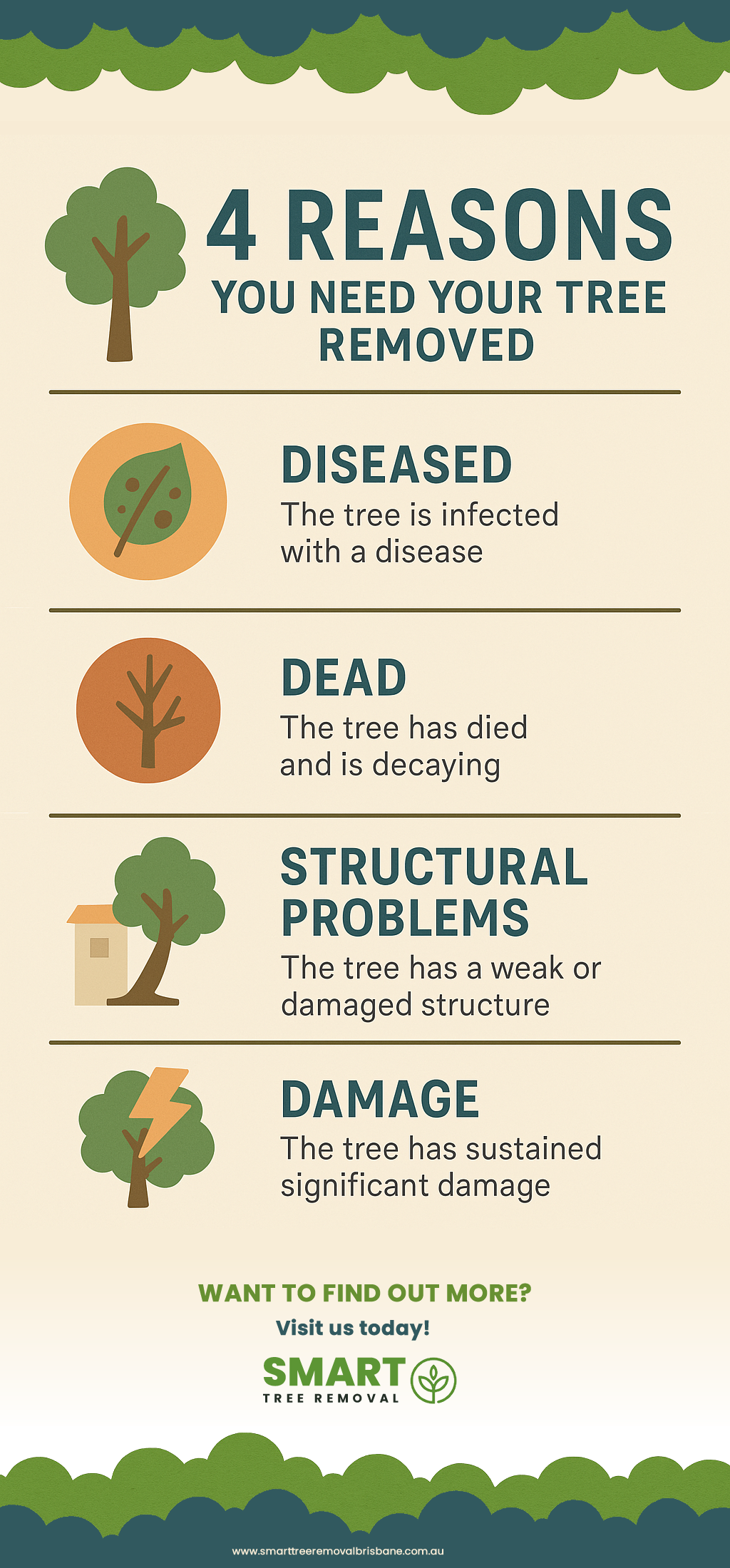
This infographic summarises four common reasons to remove a tree: disease, death, structural problems and significant damage. Please feel free to share using the code below:

Leave A Comment
You must be logged in to post a comment.